Curator's talk 5-6
5.
My beloved mother died from cancer in January of 2023. The months that followed her death were a difficult sorting and grappling with everything that she had assembled in the house where she lived for over fifty years. My two sisters and I had to lay hands on all her possessions, sorting into streams of things to give away, things to keep, things to discard. I realized quickly that my mother was also a curator and was a steward of almost every bit of paper that passed through her hands during the eighty-two years of her life. The paper was overwhelming – letters, greeting cards, postcards, photographs, receipts, bills, documents and things she gathered on her travels. My mum saved all the receipts from setting up her first home with my father after they were married in 1961. All the furniture they purchased from Hardy’s Furnishing Store on High Street in Dundee was documented and detailed in several small paper log books, each weekly four pound payment was documented in a receipt pasted into the log. I recognize my mother’s beautiful florid handwriting when it appears on those pages and think about how important these incremental payments were to the young couple, establishing credit, owning objects, and forging a life-long partnership. The meaning of all this is disassociated from the gesture of commitment to a marriage and family. She kept these logs because, I am sure, they evoked, for her, tangible evidence of a time of great promise, hope, and happiness. What do these bits of paper mean to me now? They are charged with tangible energy, evidence of my parents’ existence, now that they are gone. This significance seems to be only pertinent to me – I think about how to dispose of the record, how to let it roll back into the vast meaninglessness of everything that exists.
I have been fascinated with cursive script and how the body manifests a particular rhythm and shape to the form of writing, that becomes a unique signature, recognizable by others. In this digital age of screens and typing, the art of cursive is disappearing, and so too therefore is that particular unique fingerprint of our individuality. What secrets do we betray in our written script? Graphologists have been employed to determine a person’s personality, demeanor and psychological state from handwriting. I wonder if we can see some foreboding in one of painter Tom Thomson’s letters to his patron Dr. MacCallum when he writes the words “Canoe Lake.” What would Donald Trump’s hand create when asked to write the words “empathy” or “kindness”?
The works on paper by Jaumes Privat are often inscribed with short phrases that are written in cursive and become a visual filigree that are an integral element in his visual compositions. The writing is measured and open, almost loopy like a spool of thread spilled on the page. The frail beauty of the lines and flow inherent in rendering script, documents the act of the artist’s hand gesturing in marked form, symbols of sound and composite meaning of a sentence or stream of words. The written elements in emphatic black spring up like a floral element that sits in the fecund foundation of coloured bands, solid shapes and scumbled ground. Flowers are appreciated by anyone passing by because the scent is particular but recognizable to all.
“and one / as / a nothing / does everything and also / the song
then / to come down / and the / singing / does / again / all / your / nothing” (Privat)
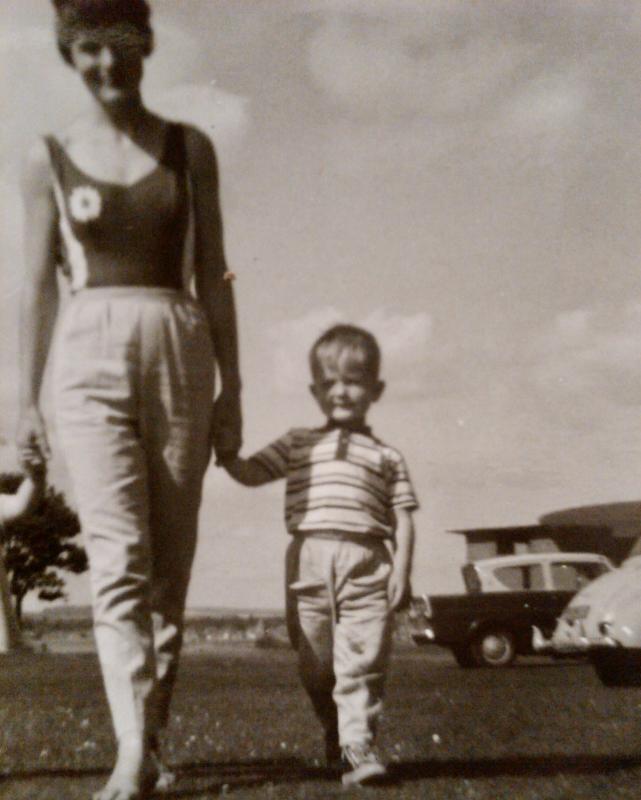
My mother and I, St. Andrews, Scotland, c. 1966
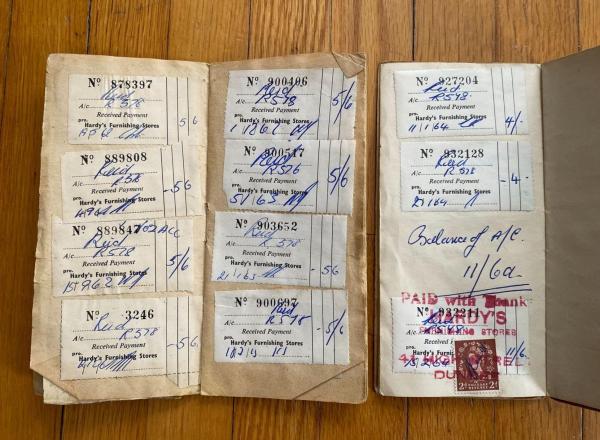
Hardy's Furnishings, detail of receipt book, c. 1961
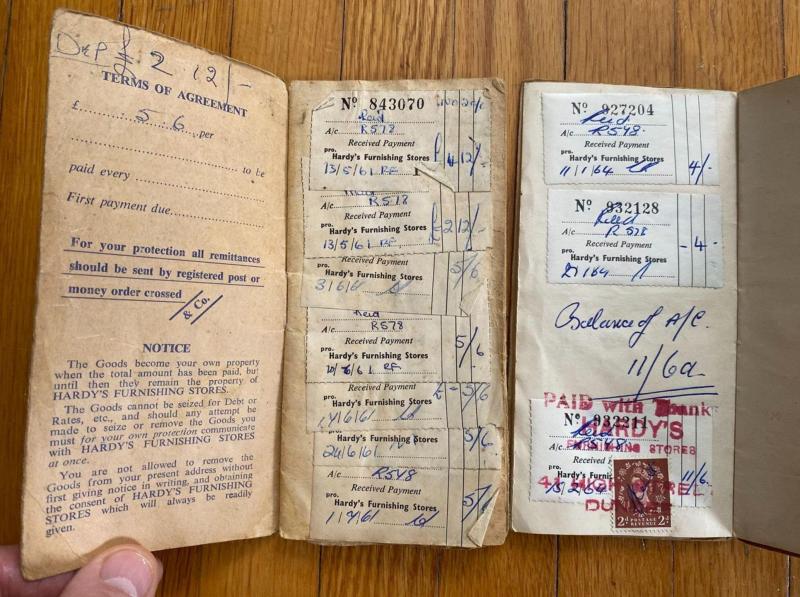
Hardy's Furnishings, detail of receipt book, c. 1961
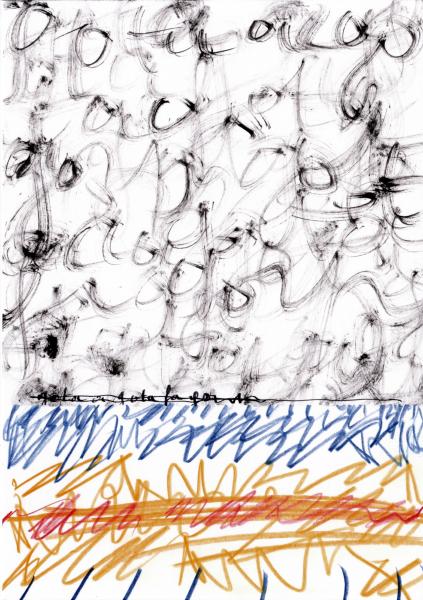
Detail of drawing on paper by Jaumes Privat
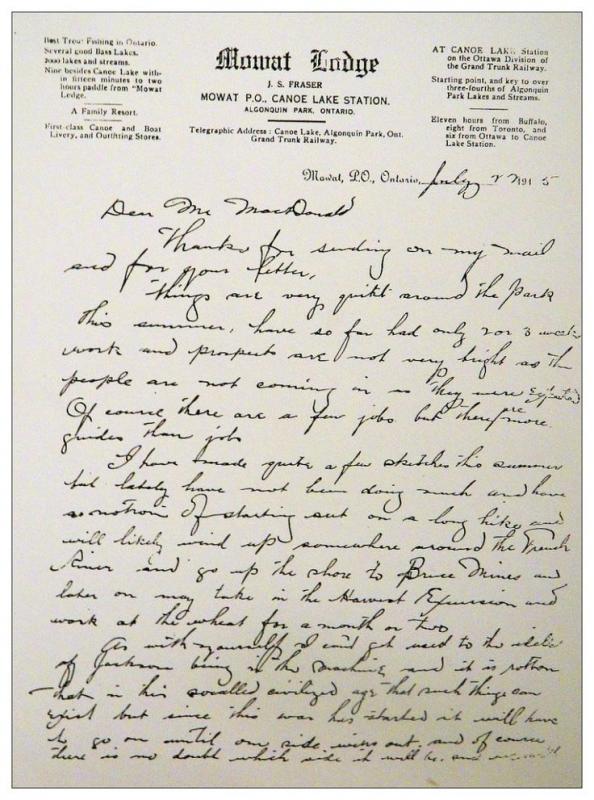
Image of letter written by Tom Thomson, Mowat Lodge, Canoe Lake, 1915
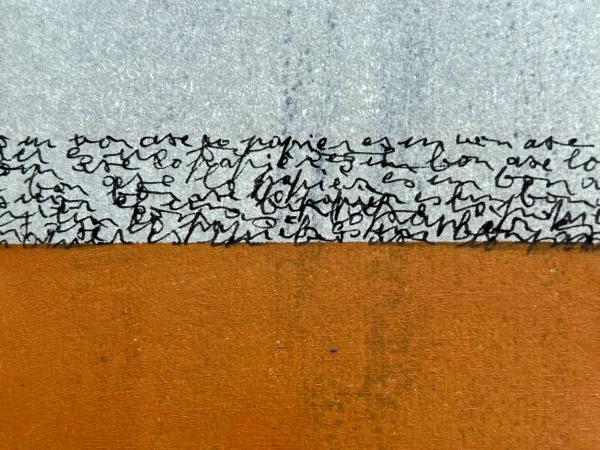
Detail of drawing on paper by Jaumes Privat
6.
As part of my yoga teacher training, I studied Bhakti yoga that involves devotional chanting of ancient mantras. During this course of study, I learned about the concept of “Beej” or seed sounds. The seven root sounds produce vibrations that activate the chakras – seven energy centres in our body that mark stations between our sitting bones to the crown of our head. LAM, VAM, RAM, YAM, HAM, OM, AUM.
The concept of the beej mantra seems like knowledge that I already knew before encountering. There are other sounds in our languages where the beej is a common link. The sound “ma” for example is the beej sound associated with the source, the mother or nurturing and is common in most languages. In Sanskrit manas means “mind” or “thought”. In Japan, Ma means silence or the quiet space between other sounds. In Sanskrit, Maha means great as in Maharaja or Mahatma or Mahabharata.
There is a powerful mantra in Sanskrit that is repeated frequently by yogis, often an instruction to a student. Tat tvam asi means “Thou art that” or “you are all that”. It is an epithet that sums up the relationship between the individual and the absolute. Tat tvam asi is one of the four principle short statements from the Hindu texts called The Upanishads. It can be offered as a blessing or a comfort to someone who is troubled, reminding them that they are part of the universal one, that all is as it should be, everything is everything. It is a compassionate gesture offering all-encompassing acceptance – whatever you are experiencing is also connected to me. There is a beauty in the epithet acknowledging that our energy is part of the universal energy and we are never apart from the entirety.
This concept is a beautiful place from which to appreciate the profundity and delicate eloquence of the language, poetry, and visual art of Jaumes Privat. While so specific to a certain experience of land, place, time and perspective, the artist’s delicate hand and infinite intelligence let us glimpse the perfection of beauty in our world albeit enfolded in chance and the fleeting. Language and identity are intertwined into an extensive lattice that provides a screen that is at once a protection against intrusion and an invitation for us to glimpse in. What do we see but the beauty of everyday life reflected back and the preciousness of the moment rendered paradoxically as utterly unique and infinitely repeated. We are all that.
“then / up there / a nothing / like an everything and / yet / a song / there” (Privat)
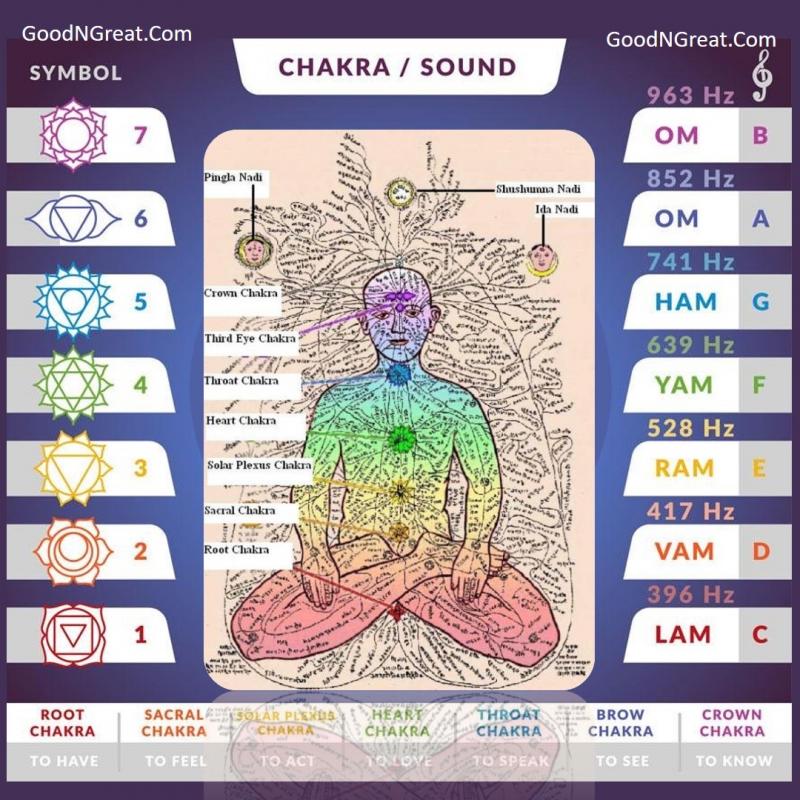
7 Chakras Beej Mantras for Meditation, Good and Great website
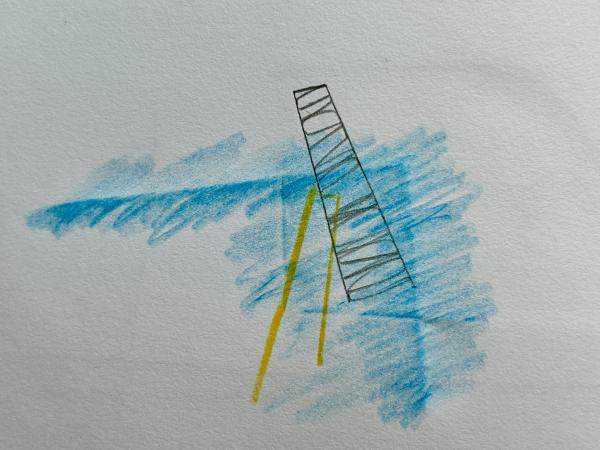
Detail of drawing on paper by Jaumes Privat
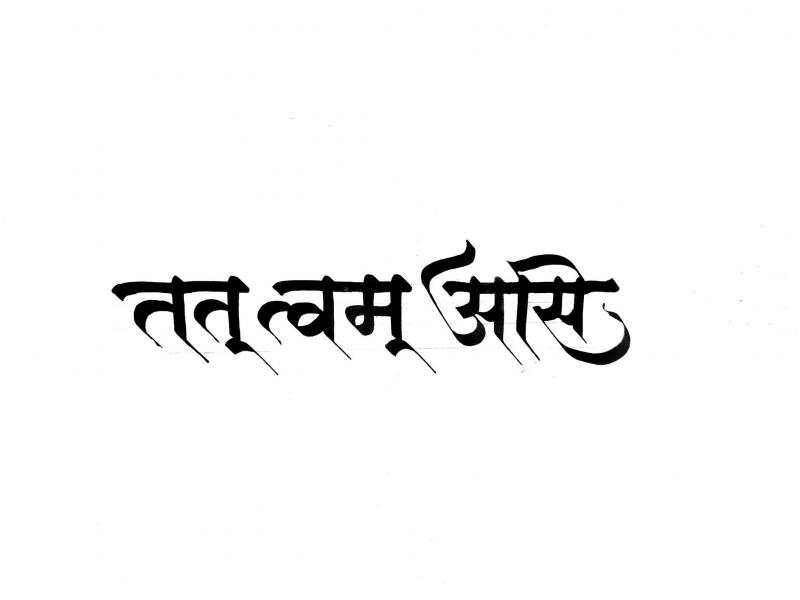
Tat Tvam Asi in Sanskrit text by Hathyogi on X
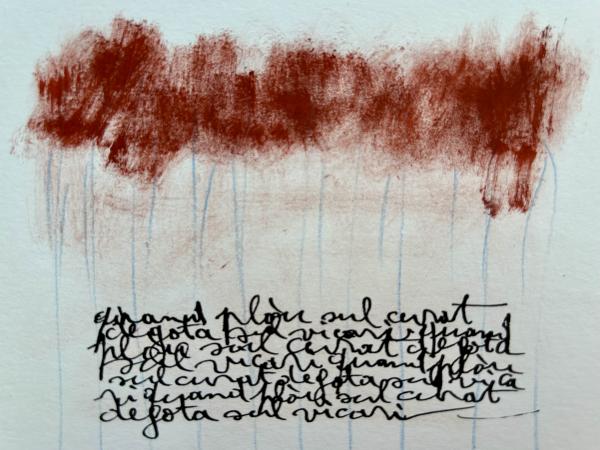
Detail of drawing on paper by Jaumes Privat
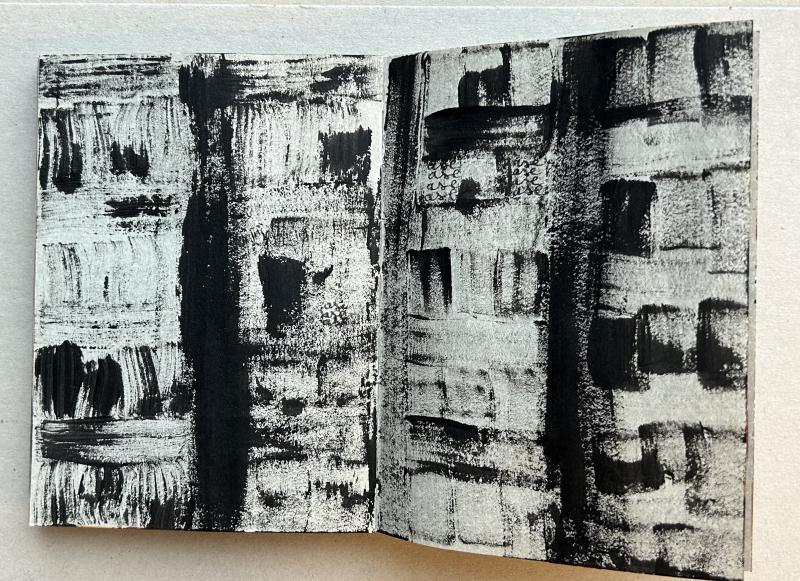
Detail of drawing on paper by Jaumes Privat
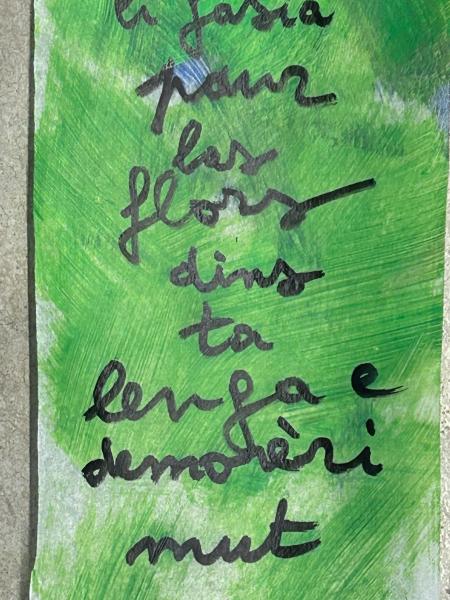
Detail of drawing on paper by Jaumes Privat