Curator's talk 3-4
3.
In 1997, I spent a month in Italy mainly centred around a rented apartment in Trastevere in Rome. I was in my thirties then, working as a curator of contemporary art – during this trip I was interested in how to reconcile the beauty of the ancient world, still vibrantly evident in Italy, with my predilection for experimental and time-based practices associated with contemporary art. Rather than relying on photographs to document my time in Italy, I began to fill a small journal with ephemeral bits of paper I encountered in my day to day movements. The paper wrapped around flowers from the market, the foil wrapper from a chocolate, the receipt from paying a museum entrance, prayer cards from churches I visited – I collected and kept them all, collaging them into the pages of the journal. Sometimes I wrote or drew on top, but mostly I assembled the fragments into pleasing patterns and documents of my time. One day I found a small accordion-folded personal phone book that someone dropped in the street. The pages were a meticulous recording of friend’s names and numbers in the cursive script of a stranger. The names on the list can be read like a poem: “Negozio, Marco, Davide, Palombi, Roberto, Massimo, Maurizio, Roberto, Filetti, Marcello.” The pages became a talismanic souvenir for me – a record of my chance interaction and the charge that this listing of names held for someone else. It was evidence of where I was on that day at a certain time able to intercept this fragment of someone else’s story. Who else intersects with this story? Whose names are on that list? Maybe friends, maybe lovers, maybe family members – all important enough to be carried with the owner written out in bold block letters printed in ink.
Jaumes Privat lets the evidence of the seemingly, everyday infiltrate his compositions. A calling card from a Fromagerie, a label from a bottle of mineral water, an ad for a pâté – all become integrated into the composition, grounding the narrative in the intimate, here and now, the daily routine of finding sustenance. Dislodged from their original purpose, these bits and pieces become elements in a beautiful visual rendering of a particular moment in time. It is, as Privat has said, something comes out of it: a nothing.
“and i carve / the cuts / the / detritus / the branch / in the photo / of / the song and i reap / your you” (Privat)
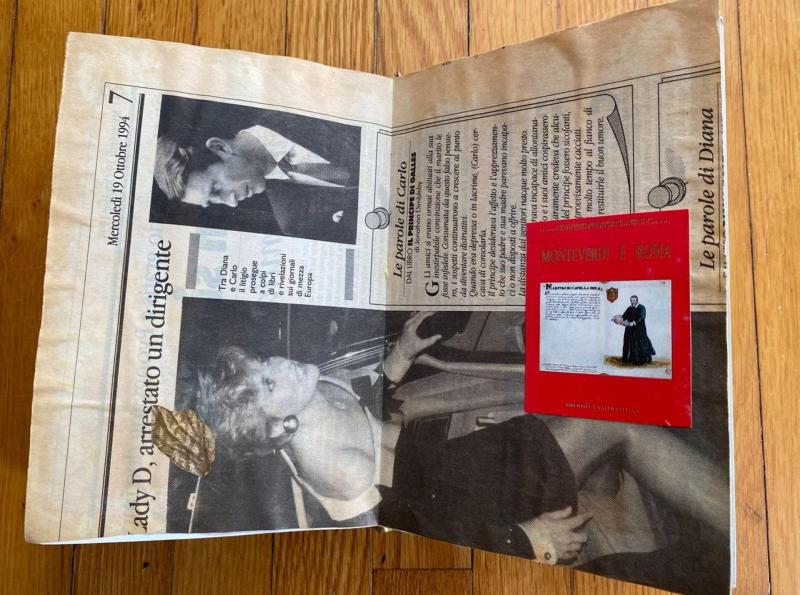
Detail of collage journal by Stuart Reid, Rome, Italy, 1994
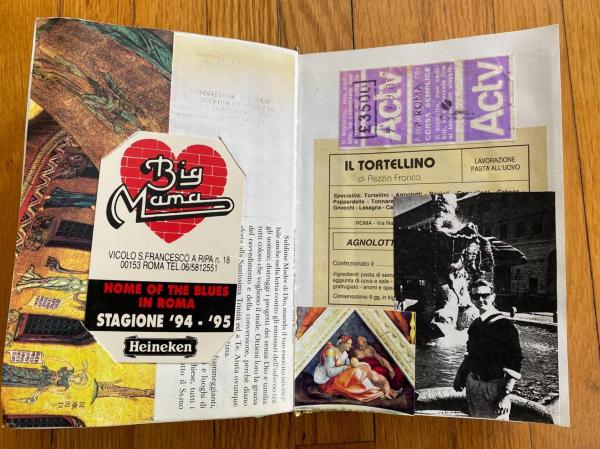
Detail of collage journal by Stuart Reid, Rome, Italy, 1994
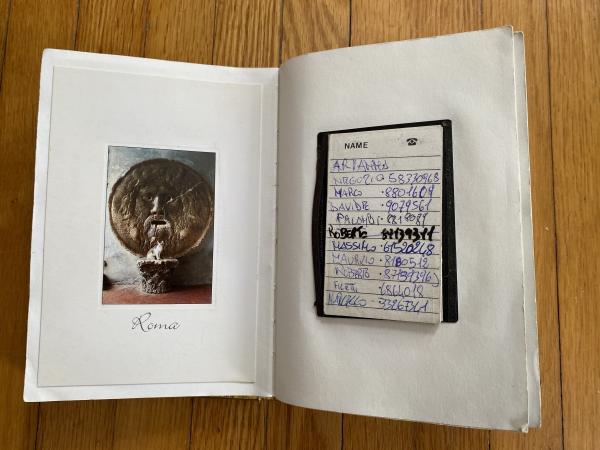
Detail of collage journal by Stuart Reid, Rome, Italy, 1994
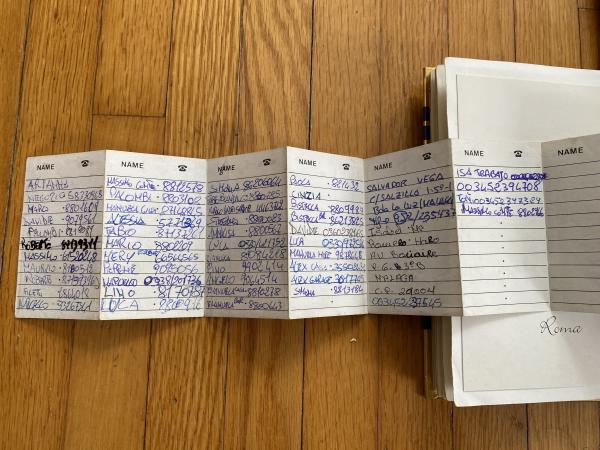
Detail of collage journal by Stuart Reid, Rome, Italy, 1994
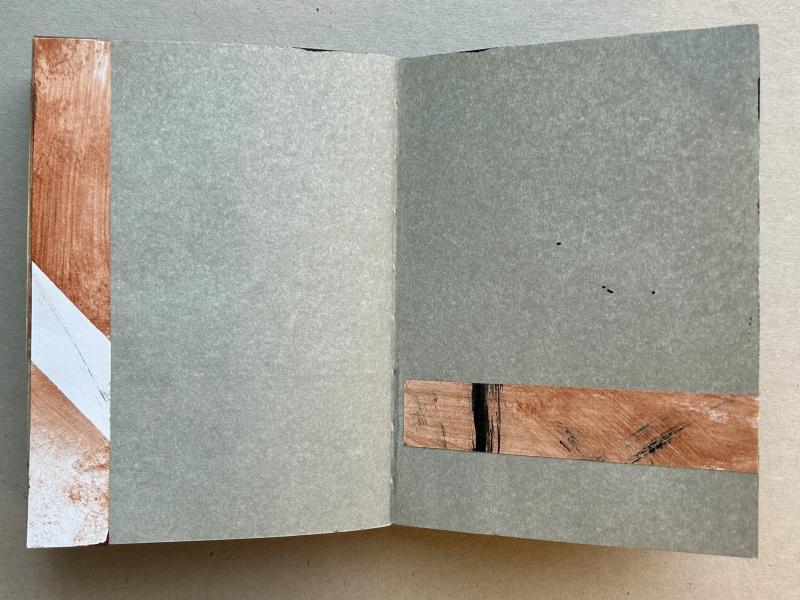
Detail of collage on paper by Jaumes Privat
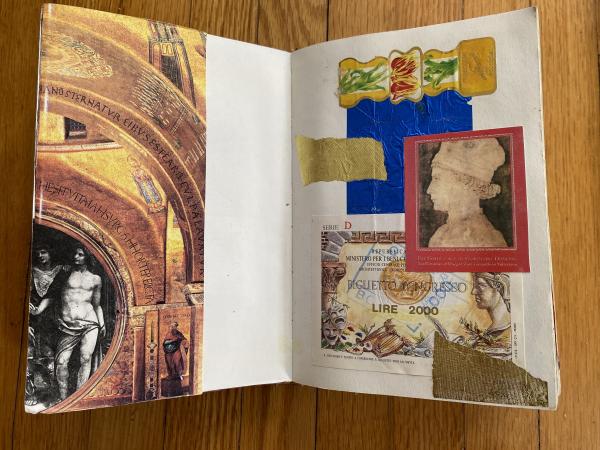
Detail of collage journal by Stuart Reid, Rome, Italy, 1994
4.
There is a beauty in occlusion, in not seeing clearly, in the covering of something with a layer of something else. Jaumes Privat creates works on paper that so eloquently evidence the exquisiteness of a thin line traipsing over a painted square. The skin-like surface of paper is altered with a painted shape or collaged form – great respect is afforded the architecture of those apparitions on a page and the subsequent hand rendering of a line, scribble, script, or mark pays homage to the open beauty of chance and happenstance. Privat has spoken of his awareness of artists that have influenced him, regional art and architecture, authors, poets, musicians, film makers. Assembling his collages and drawings, the viewer is aware of the careful placement that is informed by all that he has seen, all that has influenced his choices, all that ever was.
In my life in Grey County in Ontario, I am engaged with the rhapsody of seeing and not seeing in the landscape that surrounds me. I marvel at the massive white-out we call winter as the landscape is buried under deep drifts of lake-effect snow coming off of Lake Huron. I love to drive along the country roads near my home on days when the only punctuation to the white around me may be a faint ghosting of a line of trees, a hedgerow off in the distance between fields. In autumn our lane which is lined by a row of sugar maples is a symphony of colour as the leaves turn a vibrant yellow. Those leaves fall and cover the grass, the gardens and every horizontal surface. We leave them where they land or where the wind blows them – they are the mulch and nourishment for green lawns to re-emerge in the spring.
Our country house is surrounded by open pastureland, perhaps a kilometre in any direction before you encounter a neighbour. Sitting inside the house on a winter day, you are aware of light coming in through windows in every direction, although you cannot see the space surrounding, you are intimately aware of openness and light – the architecture of rooms is a shadowplay of shapes, colours and the shifting light documents the moving passage of the day. This visual phenomenon is not unlike what we experience on daily walks in the woods – surrounded by trees you are sensorily aware of space and presence, but vision is occluded in every direction by the trunk of a tree. Spatial awareness becomes separated from vision and is more of a feeling or a knowing. Again, my perceptions are specific to my locations, but art and travel have impacted my perceptions. Would I feel differently about the play of light across the kitchen wall had I never sat in Rome’s Pantheon and watched the beam of light from the oculus traverse the marble floor?
Moving through the quotidian ballet of life within a house, we often create marks, dents and dings that naturally record our movements. Finger smudges around light switches, the abrasion of a doorknob knocking a wall, the mark from an extension cord persistently dragged over an adjacent surface. These marks are not necessarily intentional but they can be seen as beautiful, as evidence of time passing, a patina burnished by the repetitive motion of life. Jaumes Privat has an innate sense of the power of erasure and chance in his drawing and mark-making – many of his drawings contain scribbles like accidents that convey the beauty of happenstance. The clouding of purpose to his line, belies a bit of reticence in stating his claim over the act of drawing. He holds back on infusing his identity into the act of marking, and instead lets the action be the determining factor, not the intellect.
Such layering of signifiers and symbols is technically a practice in making visual art, but it is also an allegory for language and communication. Words and fragments of language can be obstructions to meaning, signs and symbols that are barriers that occlude, that we must sense around to open up a greater awareness of time and what is unsaid, unspoken, not articulated.
“the columns / of the evening / between / dust / and mismatched / galaxies a carved / evening / the scythe / of singing” (Privat)
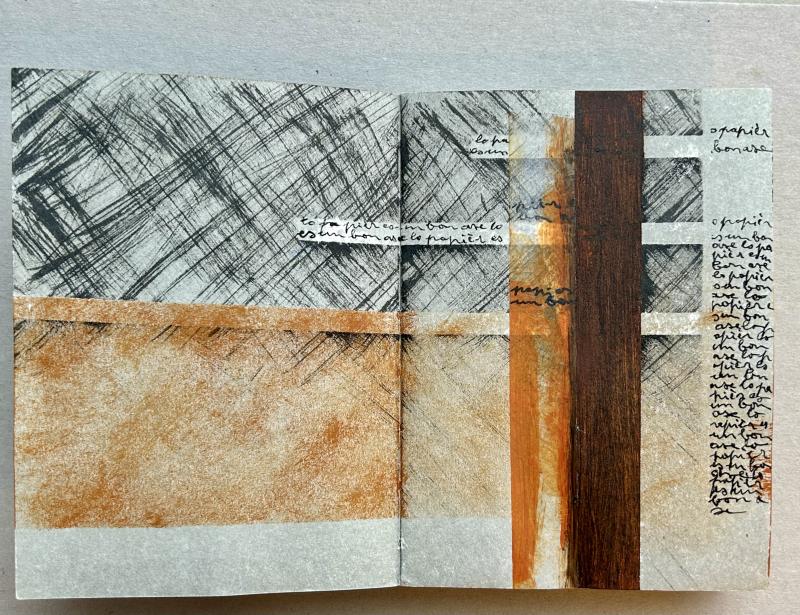
Detail of collage on paper by Jaumes Privat
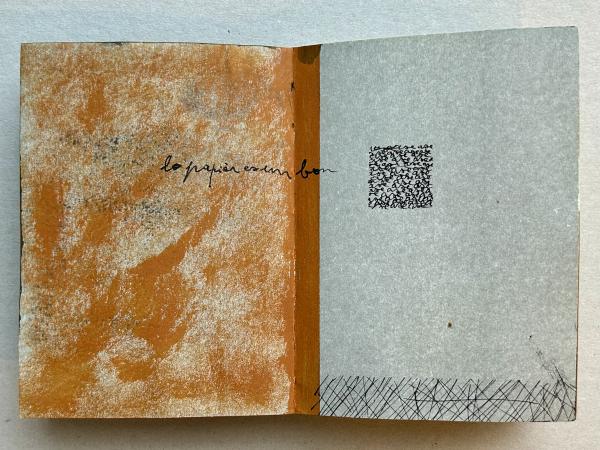
Detail of collage on paper by Jaumes Privat
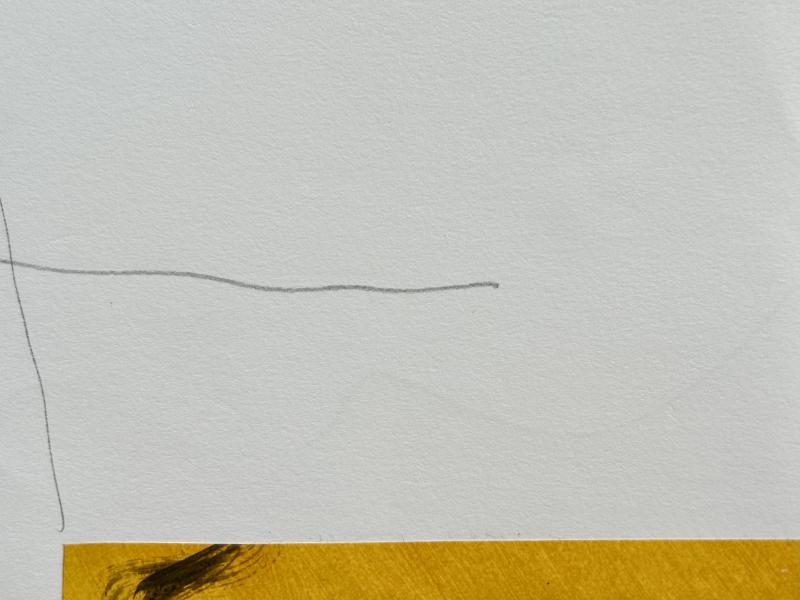
Detail of drawing on paper by Jaumes Privat
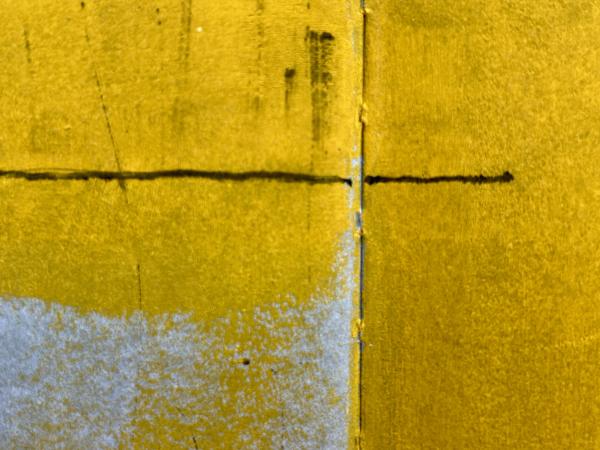
Detail of drawing on paper by Jaumes Privat
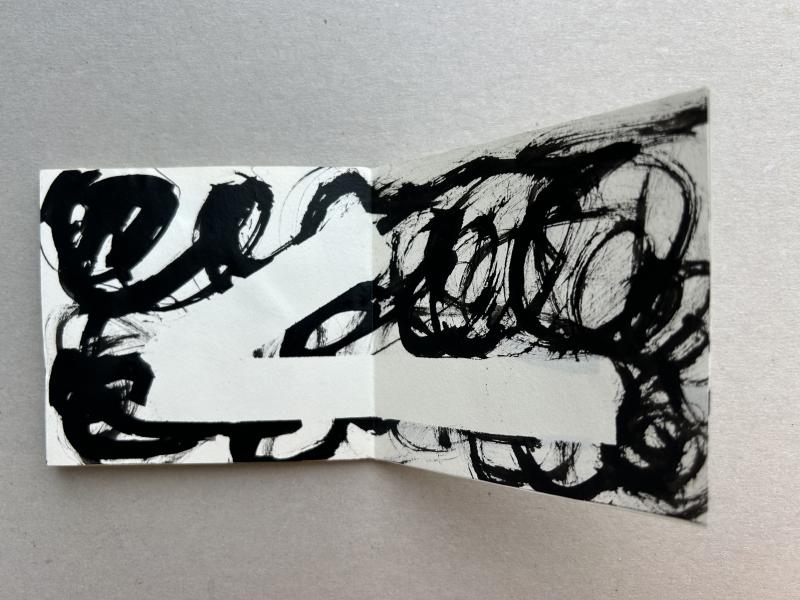
Detail of drawing on paper by Jaumes Privat
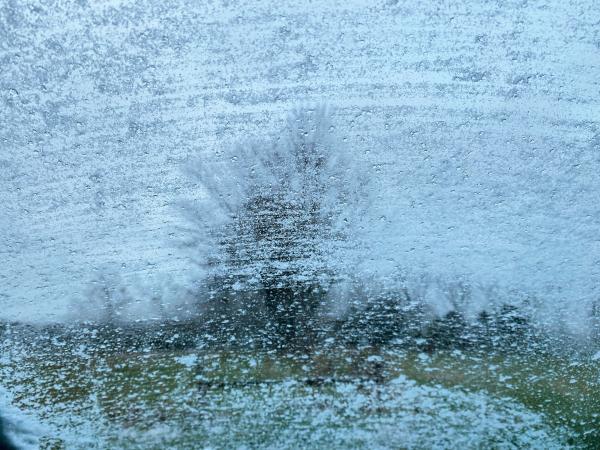
Instagram image @sjohnreid

Instagram image @sjohnreid
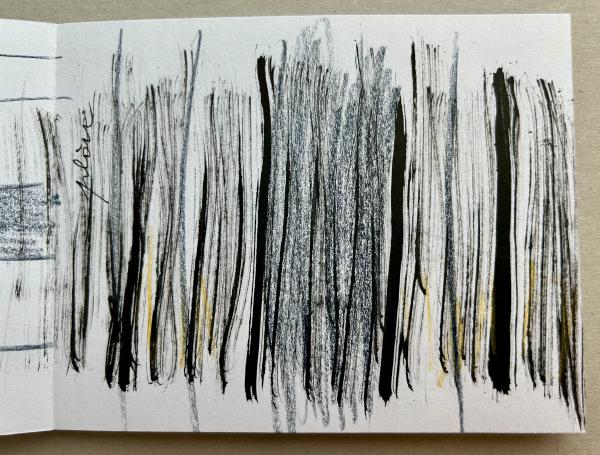
Detail of drawing on paper by Jaumes Privat