Samuel Adams
Samuel Adams (1818 –1895) married Martha Ellen Hill (1822-1863) on 21 November 1843 in Sandy Spring, Maryland. John W. Harris, a member of the Quaker church, performed the service.
Samuel Adams was a free man of African-American heritage. He was in the blacksmith trade in Catonsville, Maryland with his father John and brother Remus.
Martha Ellen Hill Adams was the older sister of renowned Underground Railroad conductor and Oakville resident James Wesley Hill. Hill was known as Canada Jim. It is perhaps this reason that the Adams family chose to settle in the village of Bronte.
About 1854, Adams moved to Canada West with his wife Martha and his five children: Margaret [or Martha], Rachel Ellen, John Wesley, Jeremiah Bewley, and Eliza Jane. Children Josephine and Samuel James were born later in Bronte.
Samuel set up a blacksmithing business in the village where his iron work was in demand servicing the fishing and shipping industries.
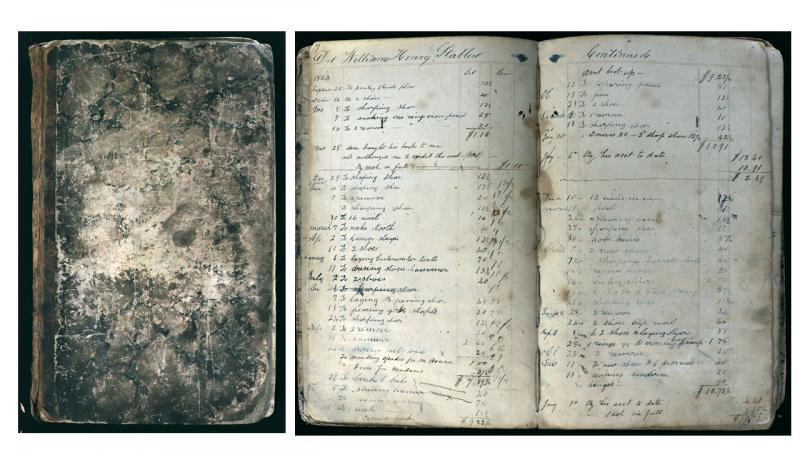
Samuel Adams account book from 1843
Samuel Adams recorded the work he performed for William Henry Stabler about 1843.
Samuel Adams kept meticulous accounts of his blacksmithing and farming activities in Maryland and later when he moved to Canada West and settled in Bronte village.
In 1848, Samuel Adams recorded the debit and credit account with Barney McGuinnis and Dwight Foster. It is assumed that these activities took place in Maryland.
Interspersed throughout this account book are the repeated writings of moral thoughts. Often these writings are accompanied by the name John Wesley Adams. John Wesley Adams was the oldest son of Samuel Adams and Martha Hill.
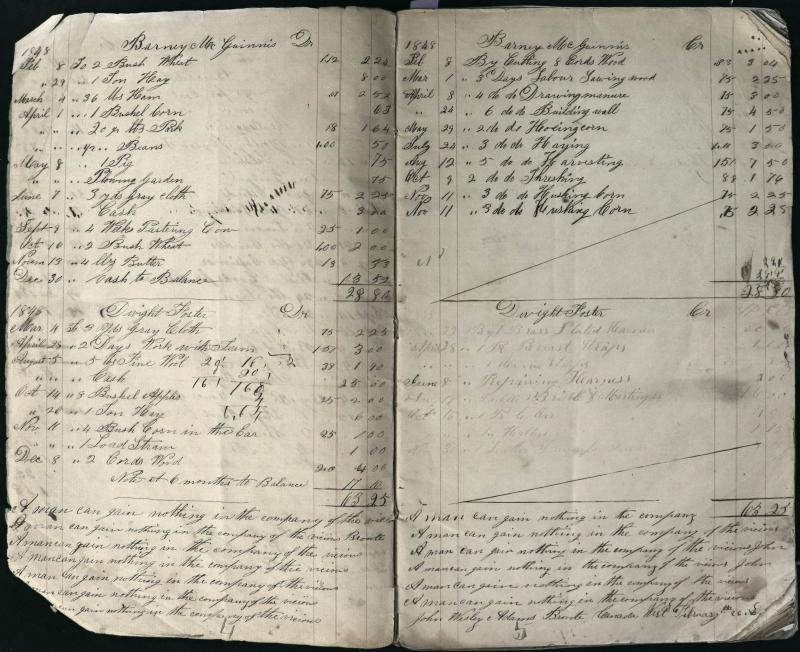
Account with Barney McGuinnis and Dwight Foster
As a blacksmith, Samuel Adams had many clients in the farming and fishing communities. Unverified information credits Samuel Adams for designing and constructing specialized equipment used in stonehooking. Stonehooking was performed in Lake Ontario by lifting large lake stones that were later used in the building industry.
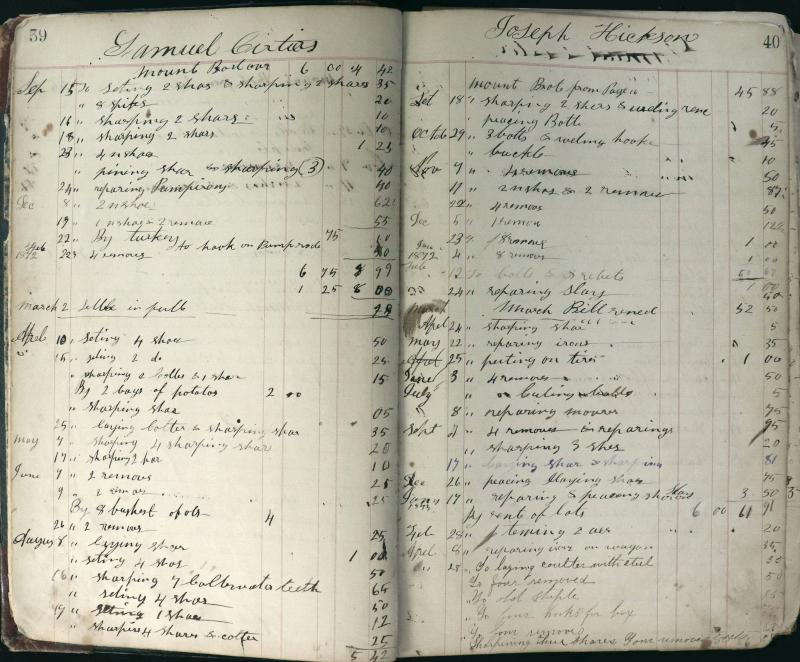
Account with Samuel Curtis and Joseph Hixon
1871-1872 accounts with Samuel Curtis and Joseph Hixon.